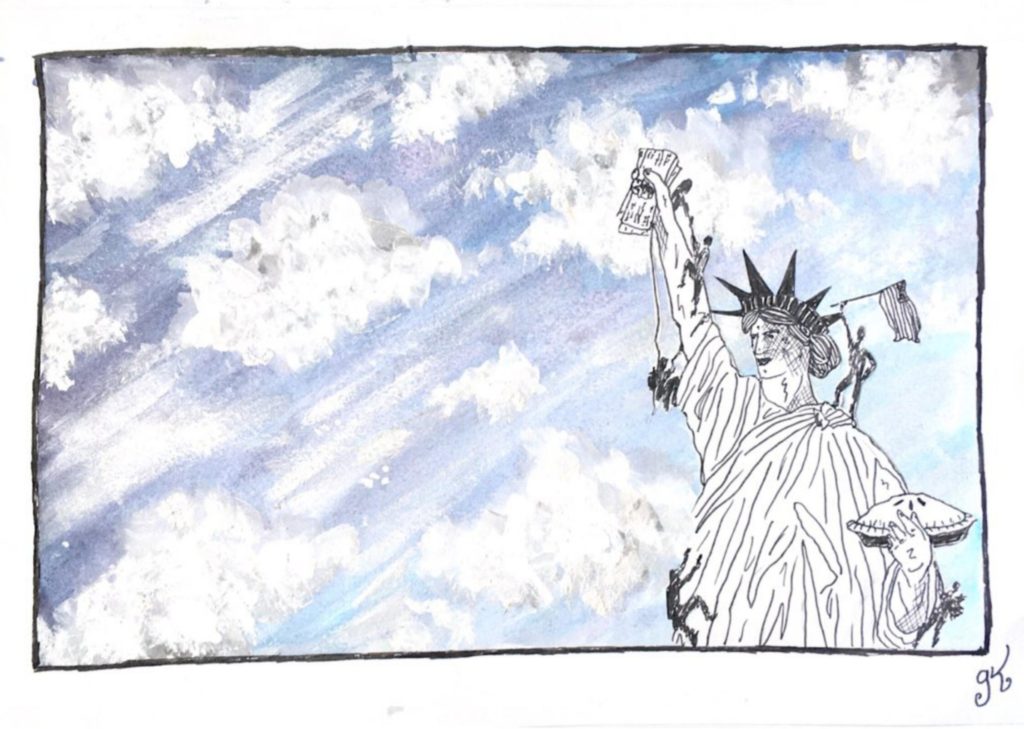
When it comes to success and failure, we can set ourselves up for disappointment. The culprit? The “American Dream.”
It tells us we have the right to success, making America an omniscient genie-like figure and promising an idealized guarantee that our wishes will be granted if we want it hard enough.
This can be true; If you do your best, acquire the correct skills and connections, and persist despite hardship, you might achieve your dreams; If someone is determined to succeed or fail, they have the potential to succeed or fail. Emphasis on potential.
Ultimately, the “American Dream” is dangerous. It consoles its subscribers too thoroughly by taking the pressure off of the pursuer and encouraging them to blame others when plans go awry. Whenever I think of this conundrum and how to avoid it, two well-known plays come to mind.
In Lorraine Hansberry’s A Raisin in the Sun, Walter Younger wants to fulfill societal expectations and gender roles, and, as a poor black man living in 1950s America, feels unable to do this because of limiting social status. His dreams are difficult to reach for an obvious reason: Walter and his family are discriminated against due to their skin color. But another roadblock remains.
Walter’s wife Ruth points out the subtler reason when she tells him, “I listen to you every day, every night and every morning, and you never say nothing new… So you would rather be Mr. Arnold than be his chauffeur. So – I would rather be living in Buckingham Palace.”
While Walter dreams of a happier lifestyle, he does little but complain about how and where he currently lives. His pursuits are dwindling for a majority of the play not because he lacks the ability to keep trying, but because he has allowed the discouragement of others to make him believe this is true. He can’t expect to reach his goals while having a pessimistic attitude towards their outcome. Neither can we.
Death of a Salesman by Arthur Miller gives insight through the arc of Willy Loman. He’s insecure and socially outcast, and this establishes a mental barrier that keeps him from reaching his dreams. His insecurities alter his behavior and give his employers a negative impression of his character. Spoiler alert: it doesn’t end well for Willy.
If that’s not enough, he projects these dreams onto his kids. He seems to hope that, if his sons succeed in the way that he had hoped to, he will have at least succeeded as a father, having inspired his sons in their pursuit of financial and social gain. This dynamic plays out all the time, both fictionally and in real-life.
In a pivotal moment, Willy’s son Biff rejects the path that Willy wants him to pursue, saying, “I stopped in the middle of that building and I saw – the sky. I saw the things that I love in this world. The work and the food and time to sit and smoke. And I looked at the pen and said to myself, what the hell am I grabbing this for? Why am I trying to become what I don’t want to be? What am I doing in an office, making a contemptuous, begging fool of myself, when all I want is out there, waiting for me the minute I say I know who I am!”
As someone who values happiness and self-understanding over money and popularity, Biff dismisses Willy’s ideals. This can be us.
While its advertisements would like us to think otherwise, not all can achieve the “American Dream.” Willy and Walter’s failures are examples of this; Certain setbacks can make someone’s pursuits harder to attain than others, yet the struggles and triumphs of persistent dreamers throughout history continue to indicate that anything is achievable.
This achievability all depends on the individual. It’s a vital distinction, in the pursuit of dreams. As The Doctor once mused in the sci-fi tv series Doctor Who, “Some people live more in twenty years than others do in eighty. It’s not the time that matters, it’s the person.” The same goes for succeeding.
The “American Dream” tends to group success with money. This is where we fail. Money solves a limited amount of problems: If we make financial success the end-all-be-all dream while inevitably yearning for other, priceless and subjective things (such as love, freedom, and contentment), we’ll never be satisfied. Arguably, those priceless pursuits become necessary over the initial ones.
Freedom, happiness, and fulfillment are subjective. “I’d much rather have a caravan in the hills / Than a mansion in the slums / When the taste of success only lasts you / Half an hour or less, but it loves you when it comes / And you laugh at yourself / While you’re bleeding to death,” Neil Finn fittingly reflects in Crowded House’s song Mansion In The Slums. One may find more satisfaction in living a physically impoverished life in a so-called “caravan in the hills” than an emotionally disconsolate life of fortune in a so-called “mansion in the slums”. Either way, the sense of fulfillment here is a singular one. You have to find what these “hills” look like to you.
While we will likely encounter speed-bumps on the road to our dreams, no one can actually make that dream’s prospects defer or dwindle except the dreamer themselves. Akin to beauty, success is in the eye of the beholder and shouldn’t be regarded as anything different.